- Placer tin requiring washing, classification and staged gravity recovery
- Rock tin where crushing, selective grinding and early coarse recovery need review
- Existing circuits losing cassiterite to slimes or mixed middlings
Cassiterite gravity concentration
Tin Ore Processing
Tin recovery starts by separating placer logic from rock-ore liberation.
Staged washing, classification and gravity recovery routes that protect coarse cassiterite while controlling losses in fine slimes.
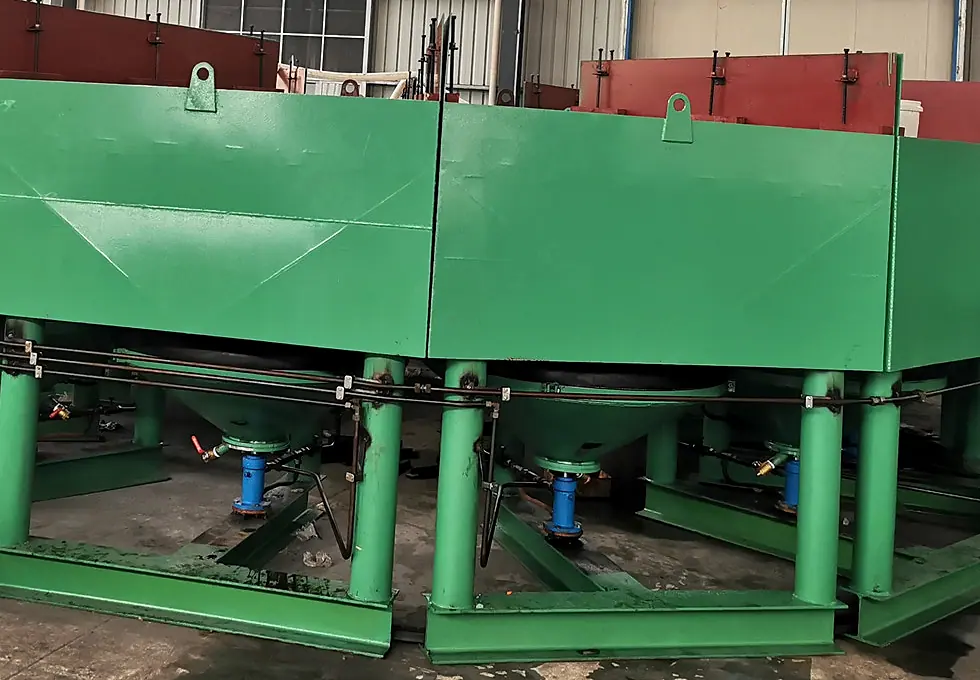
Manual process review
I first check cassiterite liberation, fragility and fine losses before selecting jigs, spirals or tables.
First reply within one business day Before a machine model
Check whether this route fits the ore.
The mineral name is only the starting point. These conditions decide whether this page is relevant or whether another test route is needed.
- The valuable mineral is not confirmed as cassiterite
- Fine tin losses dominate after aggressive washing or grinding
- Sulphides or magnetic minerals prevent a saleable concentrate
Three-question route check
Tell me how the material behaves.
These answers do not produce a final plant design. They help us identify the likely process direction, the missing evidence and the first risk worth checking.
1 deposit 2 size 3 concentrate
Tin circuits must manage both liberation and fragility
Cassiterite is dense and often suitable for gravity concentration, but density alone does not guarantee a simple plant. The valuable mineral can occur across a broad size range and may break into difficult fine particles during unnecessary crushing or aggressive recycling.
The flowsheet should recover coarse liberated tin as early as practical, then classify and treat the remaining fractions with equipment suited to their size and expected grade.
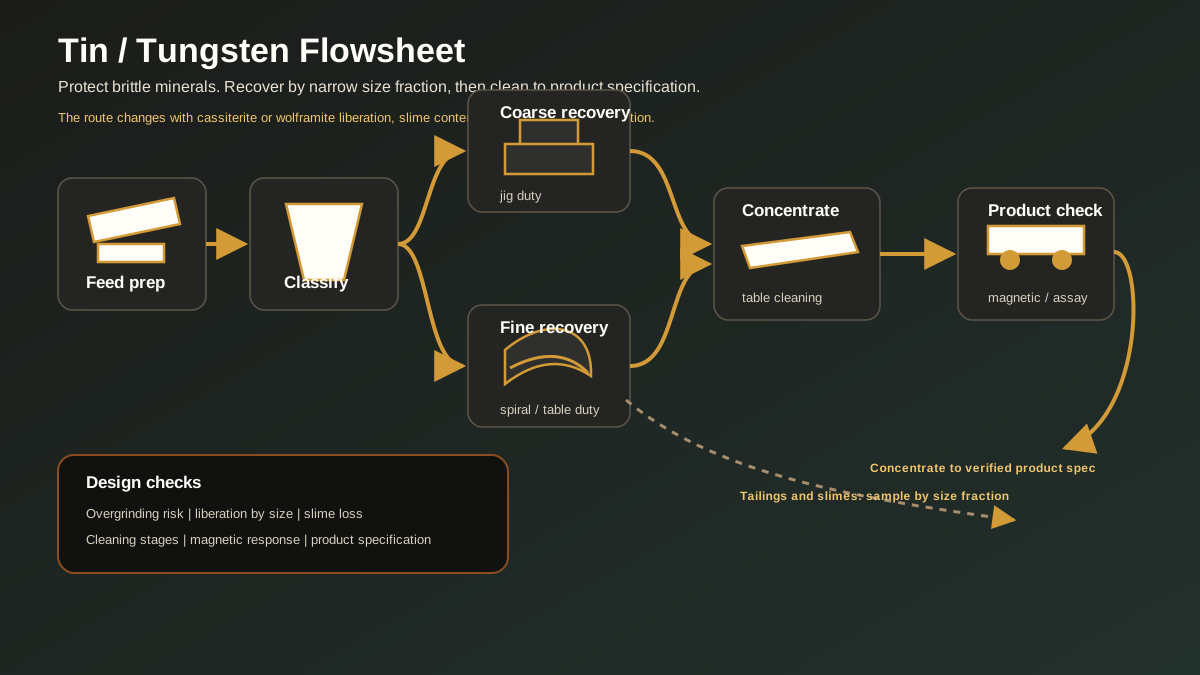
Classification is part of the separation
A gravity separator is sensitive to particle size because settling behavior changes rapidly as particles become finer. Sending a broad mixture of coarse sand, fine sand and slime to one machine makes it difficult to maintain a useful operating condition.
Classification also makes losses easier to diagnose. If the tailings are sampled by size fraction, the process team can see whether the problem is incomplete liberation, poor washing, overloaded roughing or ineffective fine recovery.
Cleaning depends on the concentrate mineralogy
Gravity roughing may produce a mixed heavy-mineral concentrate. Shaking tables, magnetic separation or sulphide removal may be considered depending on the minerals present and the final product requirement.
The correct sequence should be tested. Adding every available separator increases cost and recirculating load without guaranteeing a better saleable concentrate.
Typical process logic
Open each stage to see the duty it performs. Test data can remove, add or change a stage before equipment is sized.
01 Wash and protect the valuable mineral
Remove clay and oversize while avoiding unnecessary breakage of brittle cassiterite.
02 Classify into narrow ranges
Separate coarse, medium and fine fractions so each gravity device receives a suitable feed.
03 Recover coarse tin early
Use appropriate gravity stages before repeated handling creates more fines.
04 Treat fine fractions separately
Apply controlled fine-gravity treatment only where testing demonstrates economic recovery.
05 Clean the concentrate
Upgrade gravity products and assess removal of magnetic minerals or sulphides as required.
Why equipment appears in the route
These are process duties, not a shopping list. Feed conditions and mass flow decide whether a machine belongs in the final scope.
Scrubber and screens
Disaggregate clay and establish controlled size fractions without excessive comminution.
Jig
Recovers suitable coarse liberated cassiterite from a classified feed.
Spiral concentrator
Provides high-capacity roughing for appropriate medium and fine sand fractions.
Shaking table
Cleans and upgrades pre-concentrated tin fractions under a stable feed rate and size range.
Case notes to compare with your ore
A reference case shows how a previous scope was reasoned. It is not a design recommendation for a different deposit.
Tanzania 10 TPH
Tanzania 10 TPH Tin Tungsten Gravity Reference
A compact tin-tungsten alluvial reference case showing washing, classification, jig recovery and shaking table cleaning.
Compare project conditionsFrequently asked questions
Why is tin often lost in the fine fraction?
Cassiterite can be brittle, and excessive crushing, scrubbing or recycling creates slimes that conventional gravity equipment treats less efficiently.
Can one jig treat the full feed size?
Wide feed-size distributions reduce separation control. Classification into suitable fractions normally improves both recovery and concentrate quality.
Is magnetic separation always required?
It depends on the gangue and concentrate specification. Mineral identification and concentrate cleaning tests should determine whether it adds value.
Send the ore facts before we size the tin ore processing route.
Share the mineral, target capacity and what you already know about the feed. We will review the project within one business day.